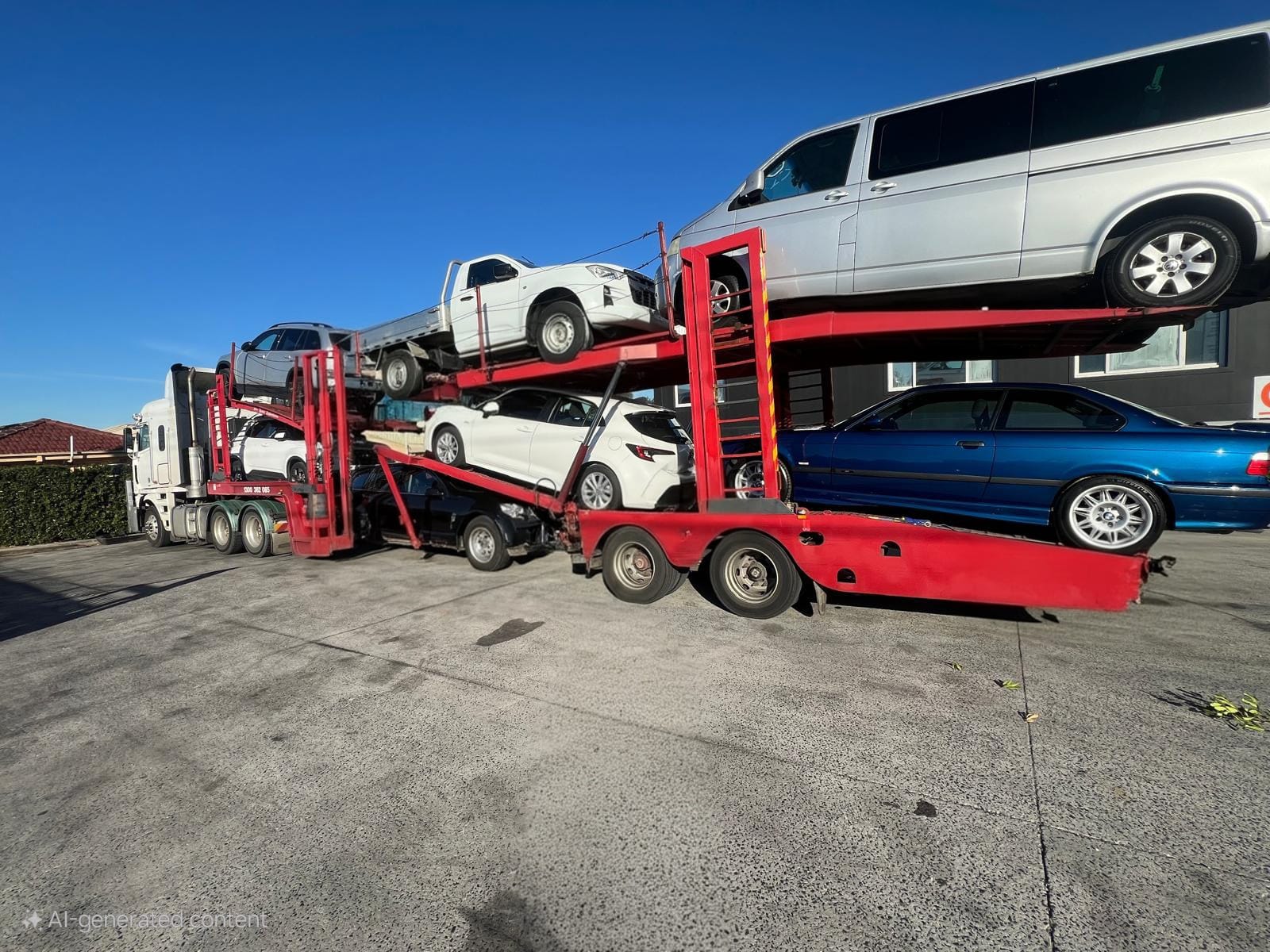
Buying a Tesla is an experience. You’ve likely spent hours customizing it on the app, tracking its delivery, and falling in love with that whisper-quiet, instant torque. But what happens when you need to move your prized EV across the country?
Whether you’re relocating from Sydney to Perth, moving to the coast, or buying a used model interstate, Tesla Car Transport Australia isn't quite the same as shipping a standard petrol car. Electric vehicles have heavy battery packs, sophisticated software, and unique handling requirements.
At Easy Car Transport Australia, we’ve seen what happens when owners (or inexperienced carriers) get it wrong—and trust us, the aftermath isn't pretty. To keep your Model 3, Y, S, or X safe and sound, here are seven costly mistakes you absolutely must avoid when shipping your Tesla.
Mistake 1: Forgetting to Activate "Transport Mode": This is the big one. Teslas are essentially high-powered computers on wheels. If a driver attempts to winch or roll your Tesla while the standard systems are active, it can cause severe, irreversible damage to the electric motors. Tesla’s built-in Transport Mode safely disengages the parking brake and limits the speed so the car can be winched onto a flatbed or trailer smoothly. Forgetting this step is a fast track to a voided warranty and a massive repair bill.
Mistake 2: Shipping with a 100% (or 0%) Battery: It’s incredibly tempting to charge your car to 100% so it’s ready for a road trip the second it rolls off the truck. Don't do it. Lithium-ion batteries shouldn't be subjected to prolonged transit stress at full capacity due to international fire and transport safety protocols. On the flip side, shipping it completely dead means the carrier can’t easily maneuver it if absolutely necessary. The sweet spot? Keep your battery charged between 20% and 50%. Industry bodies like the Electric Vehicle Council of Australia constantly highlight the importance of proper battery management, and interstate transit is no exception.
Mistake 3: Hiring a Transporter Without EV Experience: Not all transport companies are created equal. A Tesla is significantly heavier than a standard internal-combustion car of the exact same size because of the massive floor-mounted battery pack. If a transport company doesn't understand this unique weight distribution, they might load the trailer improperly, risking damage to your vehicle's undercarriage. Always ask if your carrier has specific experience handling electric vehicles.
Mistake 4: Skimping on EV-Specific Insurance Coverage: Standard transit insurance is great, but does it cover the specific components of a high-value electric vehicle? If the undercarriage gets scraped during loading, you want to make sure the battery pack is fully covered. Always check the fine print or consult independent consumer advocates like Choice Australia to fully understand how standard and transit insurance policies treat electric vehicles before you hand over the key card.
Mistake 5: Leaving Sentry Mode Turned On: We totally get it—you want to keep an eye on your baby. But leaving Sentry Mode active during a multi-day journey across the Outback will drain your battery incredibly fast. Plus, the constant motion of the truck will trigger endless recordings, overwriting your hard drive storage and leaving you with a dead car upon arrival. Turn it off before saying goodbye.
Mistake 6: Packing the Frunk and Cabin with Personal Items: It might seem like a clever hack to use your Tesla as an extra moving box, but transport companies strictly advise against this. Extra weight alters the dynamics of the truck. More importantly, items tossed around in the cabin or the front trunk (frunk) can damage the massive interior screens, tear the vegan leather, or mess with internal sensors. Keep it empty.
Mistake 7: Skipping the Pre-Transport Condition Report: Never assume everything will be fine without keeping proof. Take clear, well-lit, high-resolution photos and videos of your Tesla—inside and out—right before it goes onto the truck. Pay special attention to the aero rims, the undercarriage, and the bumpers. This documentation is your best friend in the rare event you need to make a claim.
The Bottom Line Navigating Tesla Car Transport Australia doesn't have to be a headache. By avoiding these common traps, you’ll ensure your EV arrives in the exact pristine condition it left in. Don't leave your high-tech ride in the hands of someone who treats it like a 1998 hatchback.
Looking for a team that knows exactly how to handle your EV? Reach out to the experts at Easy Car Transport Australia today, and let’s get your car moving the right way.