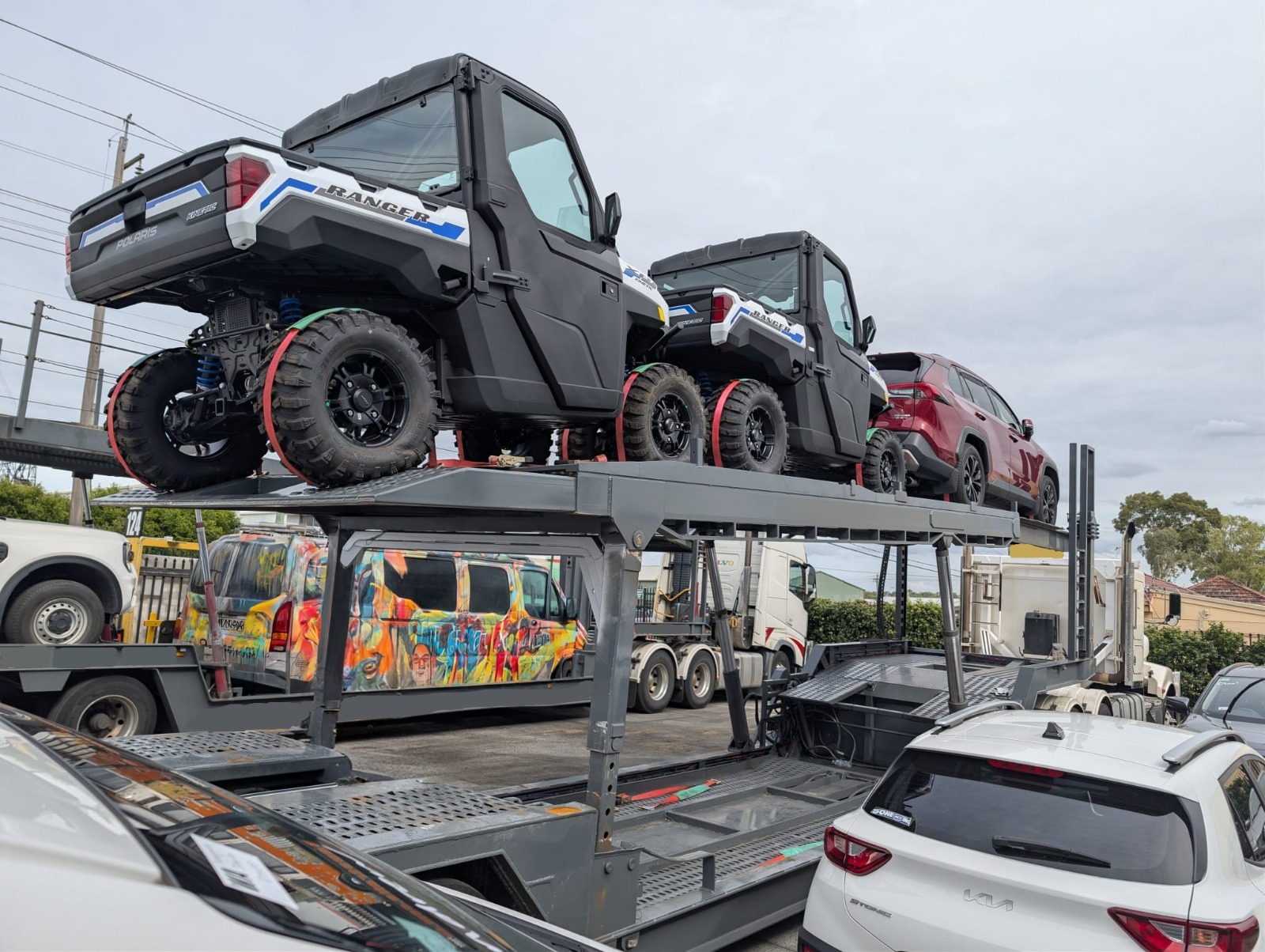
Moving a car across Australia isn't like posting a parcel. It's a full-sized, expensive, often sentimental object that has to survive a journey of hundreds or thousands of kilometres without a scratch. Whether you're relocating for work, buying a car interstate, or sending a vehicle to family on the other side of the country, understanding how car freight actually works can save you a lot of stress, and a few headaches you didn't see coming.
This guide breaks down what's worth knowing about car freight in Australia in 2026: how the process works, what's changed under new transport regulations, and how to choose a service you can trust with your keys.
Quick takeaways
"Car freight" is the industry term for transporting a vehicle on a carrier truck rather than driving it yourself. Instead of loading it into a shipping container or towing it behind another vehicle, your car is driven onto a specialised transporter, secured in place, and delivered to an agreed pickup or drop-off point.
It's a branch of the broader freight and logistics industry, built specifically around vehicles: cars, 4WDs, utes, motorbikes, caravans, and even non-running vehicles in some cases. For a country the size of Australia, where a Perth-to-Brisbane drive can eat up several days and a fair chunk of your engine's lifespan, car freight has become the practical default for interstate vehicle moves.
Most car freight providers in Australia follow a fairly similar process, even if the finer details differ between companies:
If you'd rather skip the back-and-forth of a manual quote, Easy Car Transport's car freight services page lets you generate an estimate based on your route and vehicle type in a couple of minutes.
Not every car freight job looks the same, and the option you choose affects both protection level and scheduling flexibility.
Most everyday moves, a sedan going from Sydney to Melbourne, say, or a ute heading up to the Gold Coast, are handled comfortably with open, depot-to-depot or door-to-door transport.
Car carriers operating in Australia are classified as heavy vehicles once their gross mass passes 4.5 tonnes, which places them under the Heavy Vehicle National Law, the national framework that keeps freight operators accountable for safety on the road. This framework applies to heavy vehicles over 4.5 tonnes gross mass and covers every state and territory except Western Australia and the Northern Territory, which run their own separate arrangements.
2026 brought a meaningful update. As of 1 August 2026, an amended version of the law came into effect nationally, introducing a new Heavy Vehicle Accreditation scheme, revised fatigue-management requirements, simplified work-diary record keeping, and changes to how mass, dimension and loading are handled. For everyday customers, the practical upshot is more consistent national standards around how car carrier operators manage driver fatigue, vehicle loading, and safety accreditation, all of which affects how reliably your car gets from A to B.
It's a fair question to ask any car freight provider whether their fleet and drivers operate under current accreditation, rather than assuming every "car transport" ad online meets the same bar.
A quick search for car freight services Australia throws up dozens of options, so it helps to know what actually separates a solid provider from a risky one.
If you'd like a sense of how this looks in practice, Easy Car Transport's FAQ page walks through the questions customers ask most before booking.
A little preparation goes a long way toward a smooth handover on both ends.
These steps aren't unique to any one provider. They're standard practice across the car freight services Australia offers, and they exist mainly to protect your vehicle and speed up the handover at pickup and delivery.
If you're relocating permanently rather than sending a car to a buyer, don't forget the admin side. Each state and territory sets its own timeframe and process for registering a vehicle once you've moved.
Bringing a vehicle with you when you relocate interstate generally means a visit to a local service centre to register it, or transfer its existing registration, in your new state. Requirements around roadworthy checks, compulsory third-party insurance, and stamp duty exemptions vary by jurisdiction. It's worth checking your destination state's official vehicle registration transfer guidance early, so you're not caught out by a deadline while your car is still in transit.
Lining up your freight booking with your registration timeline is one of the easiest ways to avoid a gap where your car technically isn't road legal in its new home state.
EV ownership keeps climbing across Australia, and that's changing car freight in a few practical ways. Lithium-ion batteries are classified as Class 9 dangerous goods under the Australian Dangerous Goods Code, the national framework that governs how hazardous materials move by road and rail.
That doesn't mean EVs can't be freighted. The vast majority move without any issue at all, but it does mean a few extra questions are worth asking your provider before booking:
If you're transporting a hybrid or fully electric vehicle, mention it upfront when requesting your quote so the carrier can plan loading and documentation correctly.
At the end of the day, car freight comes down to trust. You're handing over something valuable and expecting it back in the same condition you left it. Easy Car Transport has built its interstate car transport service around exactly that: clear communication, a wide carrier network across every state and territory, and a straightforward request, collect, deliver process. Have a look at the interstate routes covered to get a feel for how the process works before you commit to anything.
Is car freight the same as car shipping? Largely, yes. "Car freight," "car shipping," and "vehicle transport" are used fairly interchangeably in Australia to describe moving a car by carrier truck rather than driving it yourself.
How long does interstate car freight usually take? Transit time depends on distance and route. A Sydney-to-Melbourne move is naturally quicker than a Perth-to-Brisbane crossing. Providers can give you an estimated timeframe once they know your specific route.
Can I leave belongings in the car during transport? Rules vary by provider, but most car freight companies restrict what can travel inside the vehicle, for both weight and security reasons. Always confirm this before pickup.
Do I need insurance for car freight, or is it included? Reputable providers carry transit insurance as part of their service, but coverage limits and exclusions differ from one company to the next. Ask for the specifics in writing before booking.
What happens if my car isn't drivable? Non-running vehicles can usually still be transported, but they need specialised loading equipment. Flag this when requesting your quote so the right carrier is arranged from the start.
Car freight in Australia has become a genuinely reliable way to move a vehicle across the country without adding thousands of kilometres to the odometer, or days to your schedule. The key is doing a little homework upfront: understanding what type of transport suits your vehicle, checking your provider's compliance and insurance, and sorting your registration paperwork before your car even leaves the driveway.
If you're ready to move a vehicle anywhere in Australia, get a car freight quote from Easy Car Transport and see how straightforward interstate vehicle transport can be.