Queensland is currently one of only two states in the country still gaining more residents from interstate than it loses, and the Gold Coast has absorbed a huge share of that growth, adding close to 70,000 new residents in just the last five years, according to recent population analysis from Adept Economics and growth figures reported by KPMG. Almost every one of those moves comes with a vehicle attached, and increasingly, people are choosing to ship it rather than drive it themselves.
If you're relocating for work, buying a car from an interstate seller, or sending a vehicle to family in another state, arranging car transport from the Gold Coast doesn't need to be complicated or stressful. This guide covers how interstate vehicle shipping actually works, what the law expects from you as the owner, and how to choose a car transport Gold Coast provider you can hand your keys to with confidence.
A few years ago, driving your own car interstate was the default option. These days, that's changed for a few reasons:
Whatever the reason, the underlying question is usually the same: how do you get a vehicle safely from one side of the country to the other without adding wear, risk, or a week of annual leave to the process?
Most interstate vehicle transport follows a fairly consistent process, regardless of which company you use:
Understanding this flow makes it much easier to ask the right questions when you're comparing providers, and to know what's reasonable to expect at each stage.
Almost every interstate car shipping company offers two main carrier types, and the right one depends on the vehicle rather than personal preference.
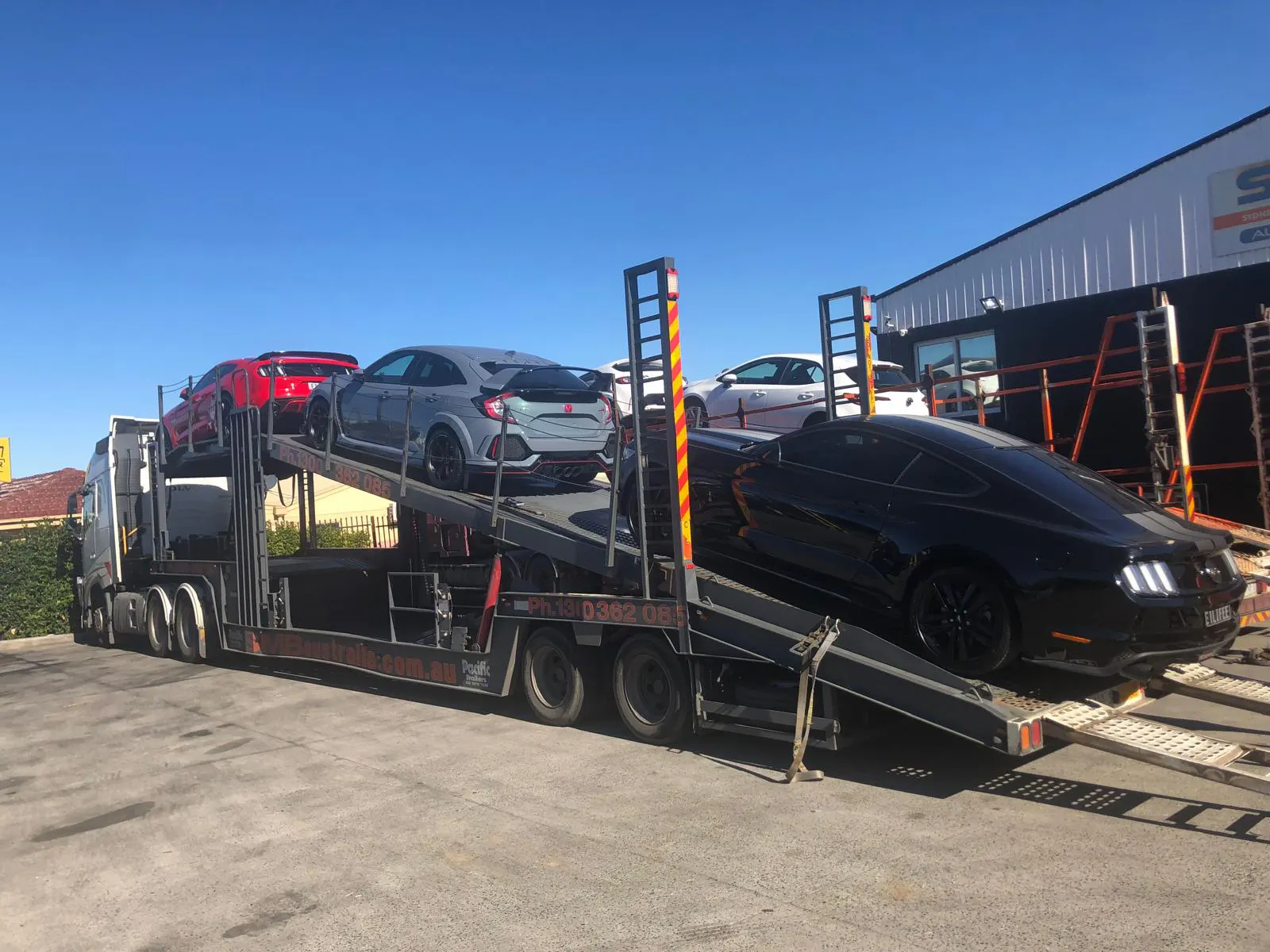
Open carriers are the standard choice for everyday sedans, SUVs, utes, and family cars. The vehicle travels on an open trailer alongside others, which is what makes this option so widely used for routine relocations.
Enclosed carriers shield the vehicle from weather, dust, and road debris for the entire journey. They're generally reserved for classic cars, low-clearance sports cars, brand-new vehicles being delivered to a dealership, or anything with sentimental or collector value where extra protection matters more than convenience.
If you're not sure which applies to your vehicle, it's worth asking your provider directly rather than assuming — ground clearance and vehicle value are usually the deciding factors.
Distance has a big impact on how a route is planned and how many transfer points a vehicle carrier might use along the way. Some of the most common car transport from Gold Coast routes include:
Because these are such long distances, carriers usually plan routes that combine multiple customers' vehicles heading the same way, which is a large part of why professional transport is so much more practical than attempting the drive solo. You can see the full list of supported corridors, including regional pickup and delivery points, on the interstate locations page.
Shipping a car interstate is straightforward, but if you're permanently relocating the vehicle rather than just sending it somewhere temporarily, there are a few legal steps worth knowing about in advance.
Most states, including Queensland, generally require you to register a relocated vehicle in your new home state within a short window after the move — Queensland's own guidance points to 14 days from when the car is garaged at its new address, after which fines can apply. The exact requirements differ slightly by state. New South Wales, for example, asks for a valid AUVIS inspection report (commonly known as a blue slip) as part of its interstate vehicle registration process, alongside your original number plates and proof of identity.
A few practical points worth keeping in mind:
A little preparation goes a long way toward a smooth handover on both ends:
Since your vehicle is likely one of your more valuable possessions, it's worth spending a few minutes comparing providers rather than picking the first one you find. A few things worth checking:
If you'd like to see how a locally based provider approaches all of this, our About Us page outlines how our process works from booking through to delivery, and our FAQ page covers many of the specific scenarios customers ask about before booking.
Do I need to be home for pickup and delivery of my car? Not always. Many providers offer flexible pickup and delivery, including authorising someone else to be present on your behalf, or using a depot-to-depot option if a fixed appointment doesn't suit your schedule.
Can I ship a car that isn't running? In most cases, yes. Non-running or non-drivable vehicles typically require additional equipment to load, such as a winch, so it's important to flag this clearly when you request your quote rather than after booking.
What's the difference between depot-to-depot and door-to-door car transport? Door-to-door means your vehicle is collected from and delivered to a specific address, which is more convenient but can be affected by tight or hard-to-access streets. Depot-to-depot means you drop off and collect the vehicle from a fixed location, which can sometimes offer more scheduling flexibility.
Do I need a roadworthy certificate before shipping my car interstate? Not to have it transported. A roadworthy or safety certificate typically only becomes relevant once you're registering the vehicle in its new home state, not during the transport process itself.
Is my car insured while it's being transported? Reputable providers carry transit insurance covering the vehicle while it's on the carrier. It's worth confirming exactly what's covered, including any excess, before you book rather than assuming it matches your own comprehensive car insurance.
How far in advance should I book interstate car transport from the Gold Coast? Longer routes, like Gold Coast to Perth, and peak relocation periods can book out faster, so it's worth getting a quote a few weeks ahead where possible. That said, most providers can also accommodate shorter-notice bookings depending on availability.
Interstate car transport from the Gold Coast doesn't have to mean days behind the wheel or added kilometres on a car you're trying to sell or preserve. With a bit of preparation, the right paperwork sorted, and a provider who communicates clearly, your vehicle can make the trip safely while you focus on the rest of your move. You can request an obligation-free quote in a couple of minutes, or browse our full range of interstate routes and locations to see how we can help get your car where it needs to go.