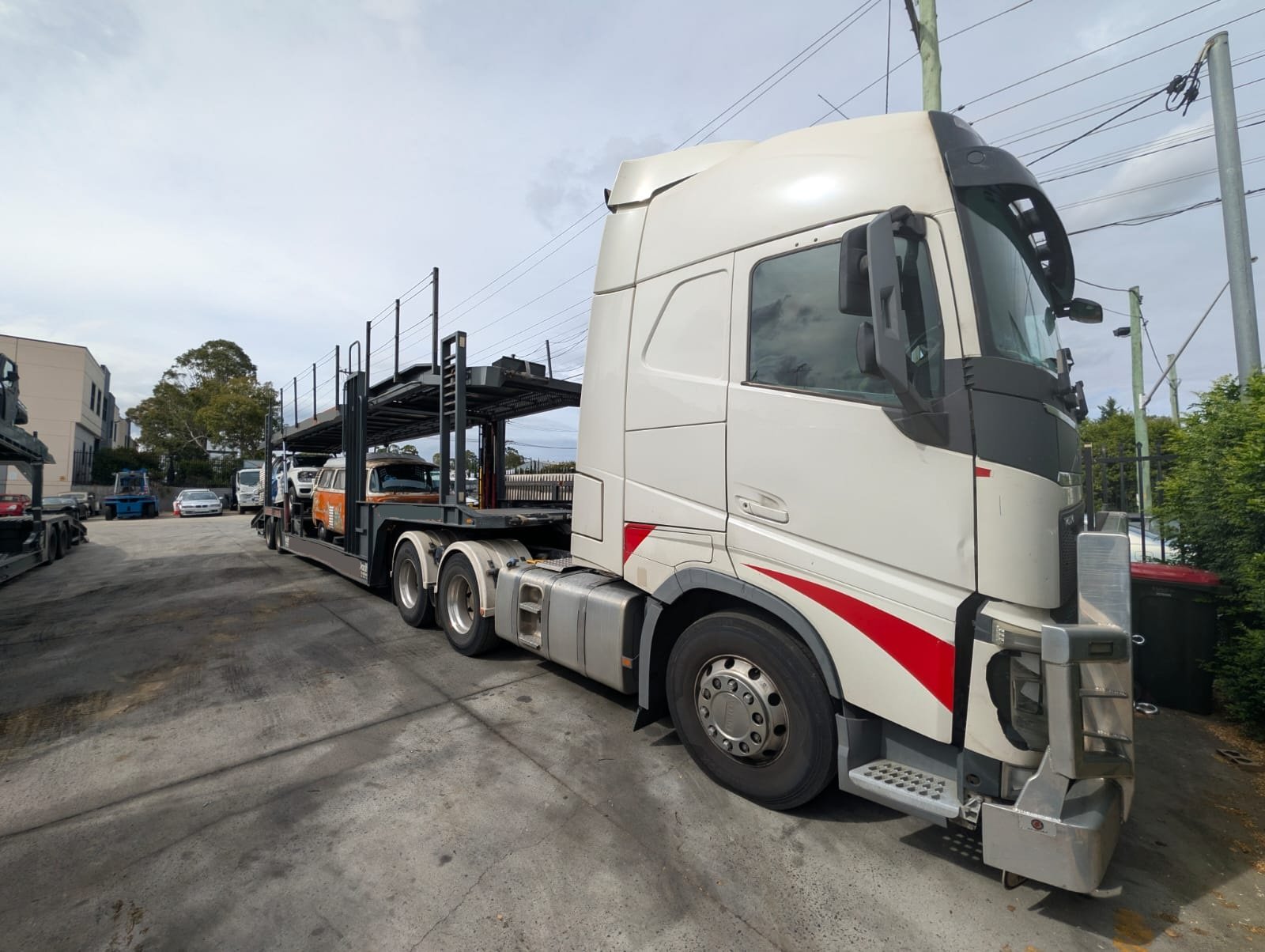
If you've ever traced a line on a map from Sydney to Darwin, you'll know it's not just far — it's a genuine cross-continental haul. You start on the harbour, cross three or four state and territory borders, pass through some of the emptiest country on Earth, and end up in a tropical city closer to Bali than to Melbourne. It's little wonder that Sydney to Darwin is regularly described as one of the longest, if not the longest, interstate car transport corridors in Australia.
For anyone who actually needs to get a vehicle from one end to the other — rather than just admire the map — that distance raises some very practical questions. How long does it take? What affects the price? Is it even safe to drive that far unaccompanied? This guide walks through everything you need to know about car transport from Sydney to Darwin, from the route itself to what shapes the timeline and the price tag.
Depending on the exact route taken, the drive between Sydney and Darwin covers somewhere in the vicinity of 3,900 to 4,000 kilometres. That's roughly the same as driving from London to Moscow and back to Berlin — except almost all of it is in one country, and a good chunk of it doesn't have phone reception.
There are two broad ways to make the trip. The more direct option runs west through Dubbo and Broken Hill, into South Australia via Port Augusta and Coober Pedy, then north through Alice Springs and Tennant Creek before joining the Stuart Highway into Darwin. The alternative runs up through inland Queensland via the Newell Highway, Longreach and Mount Isa, then joins the Barkly Highway into the Northern Territory before merging with the same final stretch of Stuart Highway. Both routes are almost entirely sealed these days, but neither is what you'd call a quick trip.
This is usually the first thing people ask, and the honest answer is: longer than it looks on a map. Driven non-stop with no breaks, the distance works out to around 40 to 43 hours behind the wheel. No sane person — or licensed heavy vehicle driver — does that in one sitting.
In practice, a professional car carrier covering this route works within strict heavy-vehicle fatigue and rest-break regulations, which means the vehicle is moving for a set number of hours before the driver has to stop and rest. Add in loading and unloading at depots along the way, fuel stops in genuinely remote stretches of the Northern Territory, and the odd delay caused by weather or roadworks, and the realistic transit window stretches out to several days rather than two.
Two things influence this more than anything else:
If you need a firm timeframe for your specific vehicle and dates, it's worth getting a personalised quote, since actual transit times vary from booking to booking.
Given how far this route stretches, it's no surprise that pricing isn't a flat, one-size-fits-all number. Rather than quote a figure that might be outdated by the time you read this, it's more useful to understand what actually drives the price up or down:
Because so many variables are in play, the most reliable way to know what your move will actually cost is to run your specific vehicle and dates through an instant quote tool rather than rely on a generic average.
It's certainly in the conversation. While Australia has other lengthy hauls — Perth to Cairns and Perth to Brisbane are contenders too — Sydney to Darwin is one of the very few routes that connects two capital cities across the full north-south span of the continent, cutting straight through the country's dead centre rather than hugging the coastline. That's what earns it the reputation as one of the longest, and arguably the most iconic, interstate car transport corridors in Australia. It also happens to follow one of the nation's most storied roads, the Stuart Highway, named after the explorer who first charted a path through the centre of the continent in the 1860s.
It's easy to picture the outback as one long, featureless stretch of red dirt, but the reality is more varied than that. Heading out of Sydney, the landscape shifts quickly from suburbs to the wheat belt around Dubbo, then out toward Broken Hill's mining country near the South Australian border. From there, the drive cuts through Port Augusta and the genuinely remote stretch to Coober Pedy, before Alice Springs marks roughly the halfway point and a welcome patch of civilisation.
North of Alice, the country opens up even further. Tennant Creek and the Barkly Tableland are classic outback territory — long straight roads, road trains, and huge gaps between towns. The final leg through Katherine and into Darwin brings a dramatic shift, from arid plains to the lush, tropical Top End.
For a self-driver, this is a bucket-list road trip. For a car being freighted, it's a logistics exercise that depends heavily on well-planned carrier routes, reliable equipment, and drivers who know the road.
A few things make the Sydney–Darwin route more demanding than your average interstate move.
Remote fuel and service gaps. Some stretches, particularly in central Australia, go for well over 100 kilometres without a service station. This is fine for a well-maintained carrier truck with planned stops, but it's one of the reasons DIY driving this route in an unfamiliar or aging vehicle carries real risk.
Wet season closures. As mentioned above, the NT's wet season can genuinely shut sections of highway for days. Flood damage to the Stuart and Barkly Highways has made headlines more than once, and it's a real factor in planning transport timing.
Interstate biosecurity checkpoints. Australia's states and territories enforce quarantine rules to stop pests and diseases spreading between regions, and the Northern Territory border is one of the more strictly enforced checkpoints in the country. If you're driving yourself and carrying fresh produce, plants, or certain foodstuffs, check the Interstate Quarantine guidelines before you travel — it doesn't affect a car being carried on a transporter, but it's worth knowing if you're following your vehicle up in a separate car.
Road trains. This is road train country, and overtaking a triple trailer on a single-lane highway takes a level of experience most casual drivers simply don't have.
The demand for Sydney to Darwin car transport tends to come from a fairly specific set of situations:
A few simple steps make the process smoother regardless of which carrier you use:
Given everything above — the fatigue-inducing distance, the remote stretches, the wet season risk, and the wear and tear on a vehicle over 4,000 kilometres of outback road — it's easy to see why most people choose to have their car carried rather than drive it themselves. A professional service handles the logistics, works within legal driving-hour limits, and gets the vehicle there without adding a single kilometre to your own travel plans.
If you're weighing up your options, it's worth browsing other popular interstate routes to see how Sydney to Darwin compares, or checking the FAQ page for answers to common questions about the booking process.
How long does car transport from Sydney to Darwin take?
Transit time typically runs to several days once loading, driver rest breaks, and route conditions are factored in, even though the raw driving distance is around 40 hours non-stop.
How much does it cost to transport a car from Sydney to Darwin?
There's no fixed rate — cost depends on vehicle size, carrier type, pickup and delivery preferences, and seasonal demand. Getting a quote tailored to your vehicle and dates is the most accurate way to find out.
Is Sydney to Darwin the longest interstate car transport route in Australia?
It's widely regarded as one of the longest, connecting two capital cities across the full length of the continent through the centre of Australia rather than along the coast.
Does the wet season affect delivery times?
Yes. Between November and April, heavy rain in the Top End can occasionally close sections of highway, which may add time to deliveries scheduled during those months.
Should I drive my car to Darwin myself instead of transporting it?
It's an option, but the distance, remote fuel stops, and road train traffic make it a demanding trip. Many people prefer to fly and have their vehicle transported separately.
Whichever direction you're heading, moving a car across this much of the country is easier left to people who do it regularly. You can get a sense of your own timeline and options by requesting a free quote directly through Easy Car Transport.