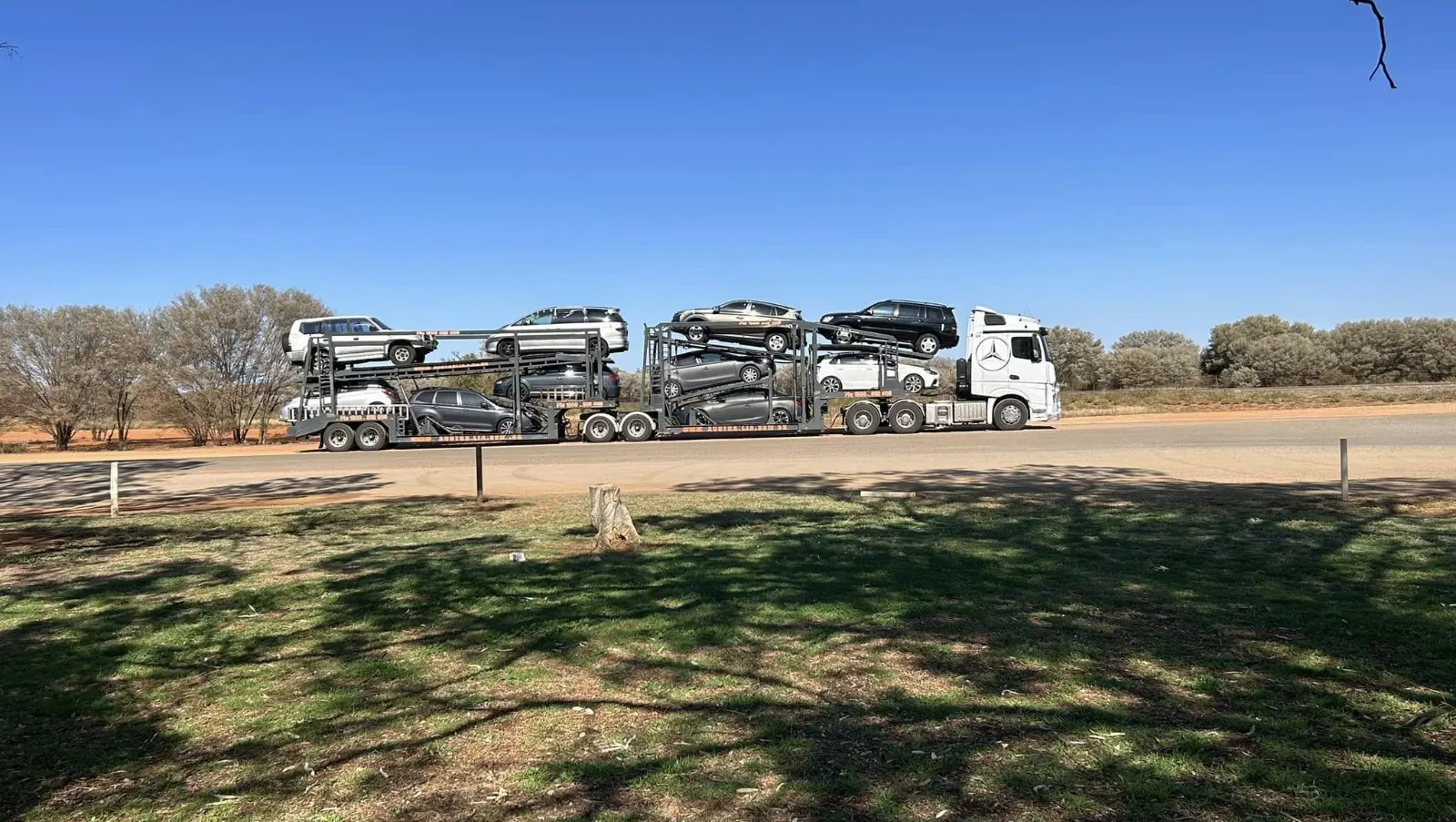
Quick answer: You can get a car to Tasmania two ways: drive it onto the Spirit of Tasmania ferry yourself, or book a professional car carrier to move it for you. The ferry suits people who are travelling anyway. A carrier suits people who are relocating, buying or selling a vehicle, or simply don’t want to make the trip. The cost of either depends on a handful of factors, which we break down below without the guesswork.
Most of us have shifted a car interstate by road at some point. You pick a route, fill the tank and go. Tasmania doesn’t work that way, because Bass Strait is in the way, and that one stretch of water changes the whole plan.
Once you add ferry timetables, biosecurity rules and the question of who’s actually going to drive the thing, it’s no surprise people start searching for car transport to Tasmania and end up with twelve tabs open and more questions than answers.
This guide is here to tidy that up. We’ll walk through both options, explain what really moves the price up or down, and show you what the process looks like step by step. If you’d rather skip the reading and talk to a human, you can always get in touch with the Easy Car Transport team or call 02 7251 7123.
When people say they want to ship a car to Tasmania, they usually mean one of two things.
Option one: take it on the ferry yourself. You drive to the terminal, board the vessel with your car, sail across, and drive off on the other side.
Option two: hire a car carrier. A transport company collects the vehicle, moves it by truck and sea freight, and delivers it to an agreed address in Tasmania. You don’t need to be there for the crossing at all.
Neither option is better in every case. They solve different problems, so let’s look at each one properly.
The Spirit of Tasmania is the passenger vessel that links Geelong in Victoria with Devonport in Tasmania. According to Spirit of Tasmania’s own travel information, the two terminals are the Spirit of Tasmania Quay at 136 Corio Quay Road in North Geelong and the terminal on the Esplanade in East Devonport.
Booking is done online, and the details matter more than you might expect:
The ferry makes sense if you’re heading to Tasmania for a holiday, a long working stint or a road trip and want your own car when you land. It also works well for people who enjoy the journey itself, since the overnight crossing is part of the experience for many travellers.
The ferry isn’t always the easy path. Popular periods can book out well ahead, particularly for caravans and motorhomes, so check live availability before you plan around a date. Two new ships, Spirit of Tasmania IV and V, are scheduled to start passenger services from 31 October 2026 with more capacity, according to RACV’s guide to the ferry. The same guide puts the crossing at roughly 9.5 to 11.5 hours, depending on weather and sea conditions.
There’s also the practical side. You have to get yourself and the car to Geelong, take the time off to make the crossing, and arrange a way home afterwards if you’re not keeping the car with you. For a one-way relocation, that last point catches plenty of people out.
A professional car carrier takes the logistics off your plate. Instead of you driving to the port, the vehicle is collected, transported and delivered while you get on with your life.
The exact route depends on where your car starts, but the general pattern looks like this:
Because the car travels as freight, there’s no need for you to be on board. That’s why a carrier is so popular with people moving house, students heading to university, buyers picking up a vehicle from a mainland seller, and anyone whose car needs to arrive when they can’t be there to drive it.
A carrier is usually the better fit when you’re relocating permanently, when you’ve bought or sold a vehicle across Bass Strait, when you’d rather not clock up kilometres on a long drive, or when you’re moving something that’s awkward to drive, like a non-runner, a classic or a high-value car you want handled carefully.
If that sounds like you, Easy Car Transport can arrange open or enclosed transport and door-to-door delivery. You can see how we handle a route out of Tasmania on our Hobart car transport page.
Here’s a simple way to compare the two without getting lost in detail.
|
What matters |
Driving onto the ferry |
Using a car carrier |
|---|---|---|
|
Who does the driving |
You |
The carrier’s drivers and operators |
|
Do you need to travel too? |
Yes, a passenger is part of the booking |
No |
|
Time commitment |
Your own travel time to the terminal plus the crossing |
Minimal; mostly coordinating pickup and delivery |
|
Flexibility |
Fixed sailing times, and busy periods can sell out |
Scheduled around pickup windows and delivery locations |
|
Best for |
Holidays, extended stays, road trips |
Relocations, vehicle purchases and sales, interstate moves |
|
Wear on your car |
Kilometres to and from the terminal |
Handled by the carrier |
The honest answer is that the ferry works best when you were going to make the trip anyway, and a carrier works best when you weren’t.
We’re not going to throw numbers at you here, because anyone quoting a figure without knowing your details is guessing. What we can do is tell you what actually shapes the final quote, so you know what to expect.
Pickup and delivery locations. Moving a car from a major capital city to a Tasmanian port is a different job from collecting it from a regional town and delivering it to a rural address. Distance on both sides of the water counts.
Vehicle size and weight. A small hatchback takes up less space than a large SUV, ute or van. As a guide, our standard limits are 1.5 m high, 2.1 m wide and 5 m long for a sedan, and 2 m high, 2.1 m wide and 5.5 m long for a commercial vehicle. Anything over 3 tonnes needs to be arranged in advance, so mention oversized or heavy vehicles early.
Vehicle condition. Standard vehicles need to be fully drivable, with working brakes, handbrake and steering. If your car doesn’t run, call the office on 02 7251 7123 or email info@easycartransport.com.au before you book, because a non-runner needs extra equipment.
Timing. Peak travel seasons and busy relocation periods tend to affect availability and pricing across the whole freight network. Booking early gives you more options.
Door-to-door or depot-to-depot. Having a car collected and delivered to your front door is more convenient than dropping it at, and collecting it from, a depot. The service level you choose changes the quote.
Extras and modifications. Lowered suspension, oversized tyres, roof racks and other changes can affect how a vehicle is loaded and what it needs on the journey.
For the ferry, similar logic applies: fares depend on the season, how early you book, the size of your vehicle and the type of ticket. The operator’s booking information lays out the options, and it’s worth reading before you commit.
Want a quote built around your actual vehicle and route? You can request a personalised car transport Tasmania quote and get a straight answer instead of a ballpark.
This is the part that surprises first-timers. Tasmania takes biosecurity seriously, and that applies to vehicles just as much as to fruit or plants.
According to Biosecurity Tasmania’s guidance on vehicles, machinery and boats, pests and diseases can hide in mud, soil and other material carried on vehicles. A vehicle is allowed in if it has been fully cleaned, including the underside, wheels and wheel arches, trays and floor mats. It must be declared and is inspected, and one contaminated with plant material, soil or debris is directed for cleaning or other treatment.
In plain terms: send your car over clean.
If you’ve been four-wheel driving, working on a farm or towing a trailer through paddocks, give the vehicle an extra deep clean. A vehicle that isn’t clean enough can be directed for cleaning or treatment, which nobody wants after planning everything else.
Whether you’re on the ferry or using a carrier, the same principle applies. If you’re bringing a pet, there are separate entry conditions too. The ferry operator notes that dogs entering Tasmania are subject to biosecurity requirements, including hydatid tapeworm treatment within 14 days before entry. You can read the details in the operator’s additional information page.
If you go with a carrier, here’s what you can realistically expect from start to finish.
1. Ask for a quote. Share your pickup suburb, delivery address, vehicle make and model, and whether it runs. The more accurate you are, the more accurate the quote.
2. Confirm your booking. Once you’re happy with the details, you lock in a pickup window. Flexible dates often make scheduling easier.
3. Prepare the vehicle. Clean it properly, remove personal belongings (a baby seat, spare tyre, logbooks, jack and tools can stay) and leave at least a quarter tank of fuel. Note any existing marks.
4. Hand over the car. At pickup, you and the driver check the vehicle’s condition and record it. Take your own photos too, because a clear before-and-after record protects everyone.
5. Transit. Your car moves by road and across Bass Strait. Timeframes vary with distance, weather and sailing schedules, so treat any estimate as a guide rather than a promise.
6. Delivery and inspection. On arrival, look the car over before signing off, compare it against your photos and raise any concerns immediately.
If you’d like a person to walk you through it, call the team on 02 7251 7123 (9am to 5.30pm, Monday to Friday) or email info@easycartransport.com.au.
Still unsure? Run through these questions.
A few small habits make a big difference, whichever route you pick.
Book early. Peak periods fill up on both the ferry and the freight side. Early planning gives you more choice of dates.
Take photos. Photograph the car from every angle before it leaves your hands.
Keep paperwork handy. Have your registration, ID and booking confirmation ready.
Ask about insurance. Ask us what cover applies to your vehicle during transit, including any age limits and add-on options, and check whether your own policy extends to transport.
Remove valuables. Take out anything you’d miss. The vehicle should be empty apart from items such as a baby seat, spare tyre, logbooks, jack and tools, unless you’ve arranged to send extra goods.
Read the terms. Cancellation and change rules differ between providers and ticket types, so know what you’re agreeing to.
For a broader look at what to expect when sailing, the RACV guide to travelling on Spirit of Tasmania is a handy overview of the route, the terminals and onboard facilities.
A carrier collects your vehicle on the mainland, moves it by truck to the port, ships it across Bass Strait and delivers it to your chosen address in Tasmania. You don’t have to travel with it.
Yes. Using a car carrier means the vehicle travels as freight while you stay put or fly separately. The ferry, on the other hand, requires a passenger booking alongside the vehicle.
It depends on your situation. If you’re already making the trip, taking your own car can be efficient. If you’d need extra flights, time off work or a return journey just for the car, a carrier can work out more sensible overall. Get a quote for both before deciding.
Timeframes depend on pickup location, sailing schedules, weather and delivery address. A carrier can give you a realistic window when you request a quote.
Yes. Biosecurity rules prohibit vehicles contaminated with soil, plant material or debris, so a thorough clean is essential.
Mostly no. The vehicle should be empty apart from items like a baby seat, spare tyre, logbooks, jack and tools. Extra goods can be added as an option, up to 80 kg, kept below window level and clear of the driver’s seat, so ask when you quote.
Tell us upfront. Standard vehicles need to be drivable, so a non-runner has to be arranged with the office (02 7251 7123 or info@easycartransport.com.au) before you book.
Choosing between the ferry and a carrier comes down to a simple question: do you want to make the journey, or do you just want the car to arrive? If it’s the second one, a carrier takes care of the heavy lifting.
Easy Car Transport helps people ship vehicles to and from Tasmania with clear communication and no unnecessary jargon. When you’re ready, request your free car transport Tasmania quote and tell us what you’re moving, where it’s starting and where it needs to go. Got questions first? Our FAQ page covers the basics.