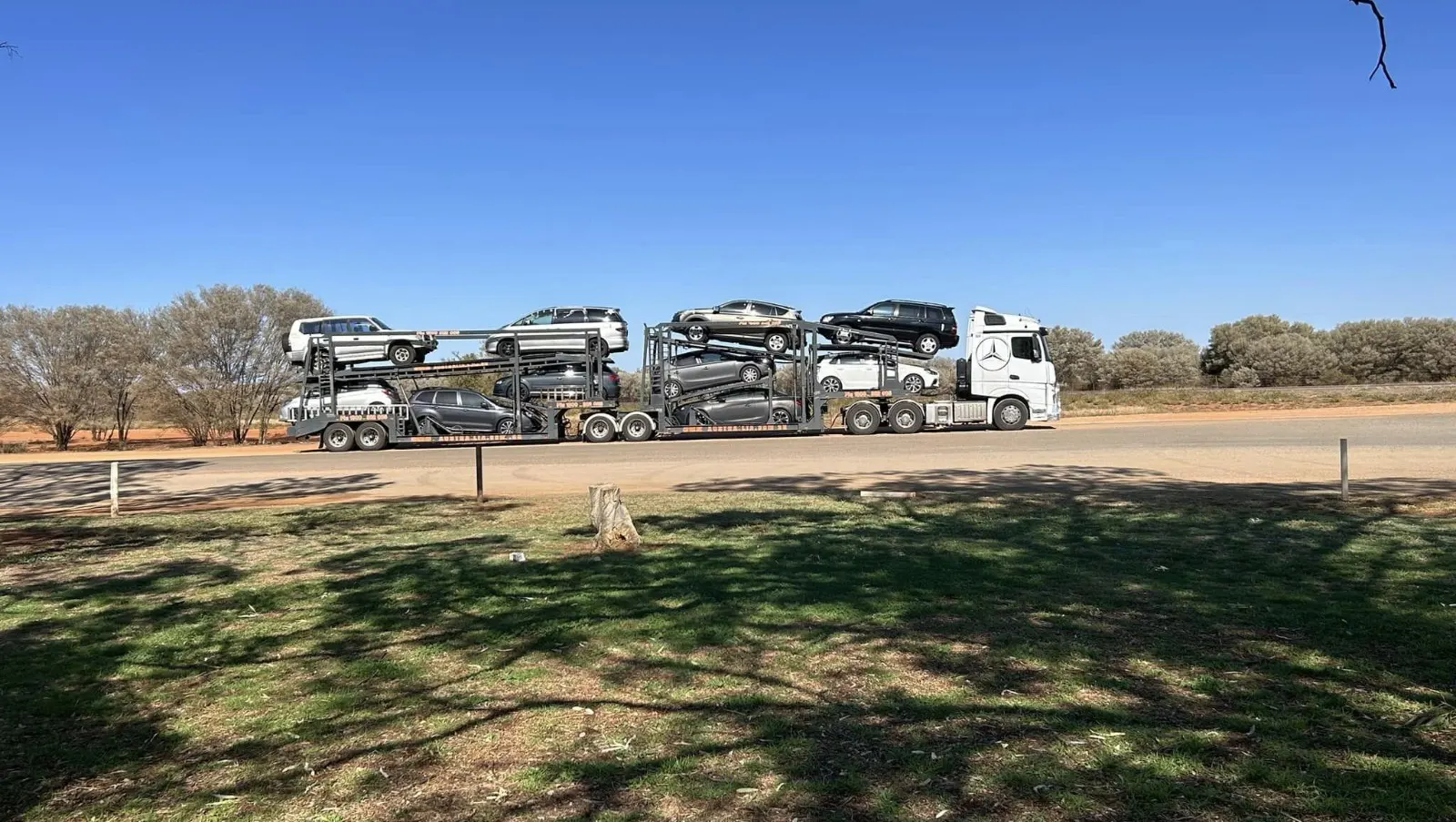
If you've just booked a move, bought a car interstate, or you're relocating for work, there's one question that comes up almost immediately: how long does interstate car transport actually take?
It's a fair thing to wonder. Unlike posting a parcel, moving a vehicle across state lines involves carriers, road networks, loading schedules, and sometimes hundreds — or thousands — of kilometres of highway. And because every route is different, there's no single answer that applies to every booking.
What we can do is break it down properly: by distance, by route, and by the everyday factors that speed things up or slow them down. That's exactly what this guide covers, so you know roughly what to expect before your vehicle even leaves the driveway.
Quick answer: Interstate car transport times in Australia generally fall into three bands — short-haul routes (like Sydney to Melbourne) typically take a few business days, mid-haul routes (like Sydney to Adelaide) usually take a bit longer, and long-haul routes across the country (like Melbourne to Perth) can take over a week. Exact timing depends on the carrier's schedule, so it's always worth confirming with your provider before you lock in a moving date.
Car carriers don't operate like a courier van doing a single point-to-point run. Most interstate car transport works on a linehaul model — a truck loads multiple vehicles heading in a similar direction, follows a scheduled route, and drops each car off along the way. That's how providers keep the service efficient and accessible for everyday drivers, rather than everyone needing a dedicated one-car truck.
Because of that model, your car's actual travel time depends on:
This is why two people transporting a car on the same route can have slightly different experiences, even if the distance is identical.
Here's a general breakdown of what to expect on some of the most commonly booked interstate routes across Australia. These are typical transit windows based on distance and standard carrier scheduling — always confirm exact timing with your transport provider, since traffic, weather, and truck availability can shift things slightly.
These are the busiest corridors in the country, which usually means more frequent truck movements and shorter waiting times between bookings.
These routes cover more ground and may involve a transfer point or an extra day or two on the road compared to the east-coast corridors.
Crossing the Nullarbor or heading into the Northern Territory is a different proposition altogether. These routes cover some of the longest stretches of highway in the country, and transit times reflect that.
You can see the full list of serviced corridors on the interstate car transport locations page if your route isn't listed above.
Distance is only part of the story. Here's what else plays into your actual delivery window.
This one's obvious, but worth stating: a truck can only travel so far in a day while sticking to safe, legal driving hours. Longer routes simply need more driving days, and remote stretches — like the Nullarbor or the Stuart Highway through the NT — often mean fewer fuel and rest stops, which carriers plan around carefully.
Interstate car carriers are heavy vehicles, and their drivers operate under Australia's national driving hour and rest-break rules, enforced by the National Heavy Vehicle Regulator. These rules exist for safety, but they also mean a truck can't simply "push through" a long haul overnight. Fatigue management is factored into every long-distance schedule, which is one reason coast-to-coast routes take longer than a straight-line distance might suggest.
Open carriers are the most common option for everyday interstate moves and tend to run on more frequent schedules because more vehicles use them. Enclosed carriers, often used for classic, luxury, or modified vehicles, may run less frequently, which can add a little time to the overall window — though it comes with extra protection from the elements.
Choosing depot-to-depot can sometimes mean a slightly faster or more predictable pickup, since your car joins the load at a fixed point rather than requiring a detour. Door-to-door is more convenient, but if you're in a hard-to-access street or a regional area off the main route, it may add a little extra time to coordinate.
A fully drivable vehicle loads and unloads quickly. A non-running vehicle requires special equipment (like a winch) and a bit more handling care, which can affect loading time and, in some cases, which truck is assigned to the job.
Flooding, bushfires, and severe storms can close highways or force detours, particularly on regional and outback routes. It's always worth keeping an eye on conditions via the Bureau of Meteorology during peak storm or bushfire season if your transport is scheduled through an affected region.
Just like removalists, car carriers get busier around end-of-financial-year, the Christmas and New Year period, and peak relocation season (typically summer). Booking a little earlier during these windows generally gives you more flexibility with pickup dates.
General timeframes are useful for planning, but nothing beats an estimate based on your actual pickup and drop-off details. A few things that help:
If you're ready to see what your route looks like, you can run your details through the quote tool on the Easy Car Transport homepage for a route-specific estimate.
A little preparation goes a long way toward keeping your vehicle on schedule:
How long does it take to ship a car interstate in Australia? It depends heavily on the route. Shorter east-coast corridors are generally quicker due to frequent truck movements, while coast-to-coast routes crossing the Nullarbor or the Northern Territory naturally take longer because of the distance and legally mandated driver rest breaks.
Does the type of carrier affect transit time? It can. Open carriers usually run on higher-frequency schedules simply because more vehicles use them, while enclosed carriers may have slightly less frequent departures, which can add a little time to your overall window.
Is door-to-door transport slower than depot-to-depot? Not necessarily, but it depends on your location. Door-to-door in a well-serviced metro area is usually just as quick, but a hard-to-reach address off the main route can sometimes add time for the truck to detour.
Which interstate route takes the longest? Coast-to-coast routes like Brisbane to Perth or Melbourne to Perth tend to have the longest transit windows, given the sheer distance across the Nullarbor Plain. Remote corridors like Darwin to Melbourne can also take longer due to less frequent scheduling.
Can weather delay interstate car transport? Yes. Flooding, bushfires, and major storms can close highways or force detours, particularly on regional and outback routes, which may push out delivery by a day or two.
Why does Tasmania take longer than a mainland trip of similar distance? Because Tasmania is an island, vehicles travelling to or from Hobart or Launceston require a Bass Strait sea crossing in addition to the road journey, which adds time compared to an equivalent mainland-only route.
There's no single number that answers "how long does interstate car transport take" for every situation — but understanding the route, the carrier type, and the everyday factors that influence scheduling gives you a realistic picture before you book. As a rule of thumb, the shorter and more frequently serviced the route, the tighter the transit window; the longer and more remote the corridor, the more buffer you should build into your plans.
If you're planning a move and want a clearer picture of timing for your specific route, take a look at the full range of interstate car transport locations or check the FAQs page for more on how the process works from booking to delivery.