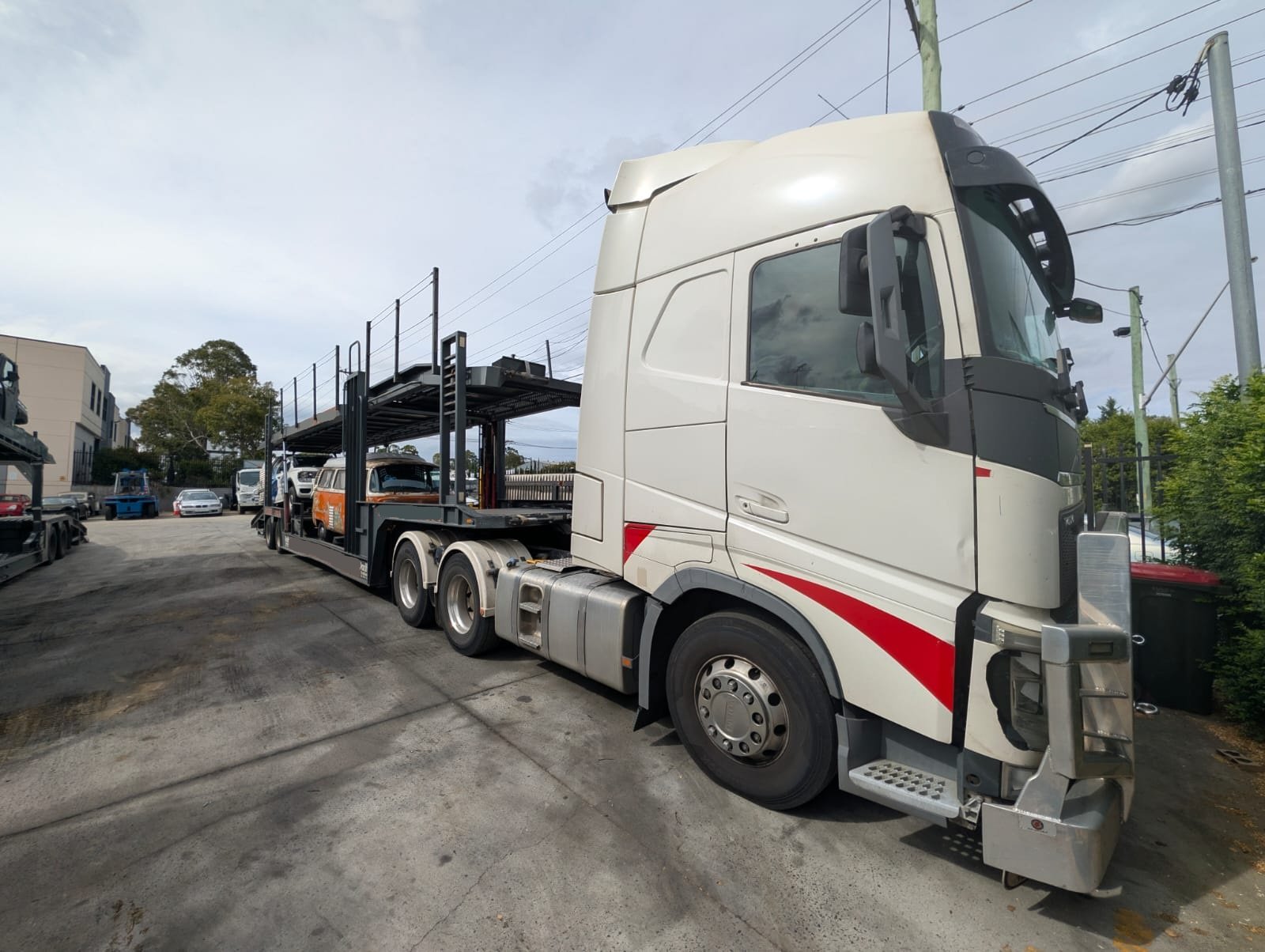
If you've ever tried to get a straight answer on what it costs to ship a car to Perth, you already know the frustration. Ask a few transport companies and you'll get a few different answers, most of them wrapped in some version of "it depends."
Here's the thing — it genuinely does depend, but not on mystery or guesswork. There's a specific set of factors behind every car transport Perth quote, and once you understand them, the whole process stops feeling like a black box.
This guide breaks down exactly what shapes the price of car transport to Perth in 2026, why interstate car transport Perth routes behave differently to a city-to-city move, and how to get an accurate, apples-to-apples quote before you book.
Quick answer: What you pay for car transport to Perth comes down to distance, vehicle size and weight, open vs enclosed carrier choice, pickup and delivery type (depot vs door-to-door), how fast you need delivery, and seasonal demand. Perth-bound routes generally sit at the higher end of Australia's interstate car transport market simply because of the distance involved — comparing quotes from a transporter who's upfront about these factors is the fastest way to land on a fair deal.
Western Australia doesn't share sealed road access with the eastern states the way, say, Victoria and New South Wales do. The only land route in is the Eyre Highway across the Nullarbor Plain — a stretch of largely uninterrupted, remote road running roughly 1,200 kilometres between Norseman and the South Australian border, according to Wikipedia's entry on the highway. Add the run from Sydney, Melbourne or Brisbane just to reach that starting point, and the total haul often lands somewhere between 3,400 and 3,900 kilometres, depending on where you're coming from.
That distance is the single biggest reason a car transport Perth quote reads differently to, say, a Sydney-to-Melbourne booking. Fewer transporters run the Nullarbor crossing on a regular schedule, fuel and driver time add up fast over that kind of distance, and there's very little alternate routing if something changes along the way. None of that means the job has to be expensive — it just means the pricing reflects real logistics rather than padding.
Every legitimate transporter builds a quote from the same handful of variables. Here's what actually moves the number.
Obvious, but worth spelling out: a quote from Adelaide will look different to one from the Gold Coast or Melbourne, purely because of how far the carrier has to travel. It's worth browsing popular interstate car transport routes to get a feel for how pricing structures typically scale with distance.
A compact hatchback takes up less deck space and adds less weight than a dual-cab ute, a full-size SUV, or a modified 4WD. Bigger or heavier vehicles reduce how many cars a carrier can load per trip, and that gets reflected in the quote. Non-standard vehicles — anything lowered, lifted, oversized, or fitted with racks and bull bars — can also change loading requirements.
This is one of the biggest levers in any quote.
| Open Carrier | Enclosed Carrier | |
|---|---|---|
| Protection | Exposed to weather and road dust | Fully shielded from the elements |
| Best suited to | Everyday daily-driver vehicles | Classic, luxury or high-value cars |
| Availability | Widely available | Limited, usually needs advance booking |
| General price position | More budget-friendly | Premium option |
Most everyday interstate car transport Perth bookings use open carriers, which is perfectly safe for the vast majority of vehicles. Enclosed transport tends to get reserved for collectible or high-value cars, where extra protection matters more than shaving costs.
Dropping your car at a depot and collecting it from another depot is typically the leaner option, since it's easier for a carrier to slot into an existing route. Door-to-door pickup and delivery adds convenience, but usually adds to the price too, because it often means a dedicated detour or a smaller connecting vehicle.
Standard delivery windows tend to be more cost-effective, because the carrier can consolidate your vehicle with others heading the same direction. Express or guaranteed delivery dates usually push the price up, since they limit how much the carrier can batch and plan around.
Car transport to Perth gets busier around certain times of year — end of financial year, the run-up to Christmas, and periods when interstate relocation spikes, like new jobs starting or FIFO workforce turnover. Booking during a quieter stretch generally opens up more competitive options than trying to arrange something at short notice during a peak.
A fully drivable car that can be loaded and unloaded under its own power is the simplest job for a carrier. A non-running vehicle needs winching equipment and extra handling time, which most transporters will price separately.
Because WA sits at a genuine distance from the eastern states, a few things are worth knowing specifically about interstate car transport Perth bookings:
The fastest way to compare quotes properly is to have the same details ready for every transporter you ask:
Once you've got those sorted, you can request a personalised quote in a couple of minutes instead of going back and forth over email.
A little prep goes a long way toward a smooth handover:
If you're moving to WA long-term, it's worth checking interstate vehicle licensing requirements early, so your registration transfer doesn't turn into a last-minute scramble once your car arrives.
Is car transport to Perth more expensive than other interstate routes? Generally, yes — mainly because of the distance involved and the smaller number of carriers running the Nullarbor crossing on a regular basis. Comparing multiple quotes and booking ahead of peak periods can still bring the price closer to shorter-route levels.
How long does interstate car transport to Perth usually take? Transit times vary by origin city and current demand, but because of the distance, Perth routes typically take longer than moves between neighbouring states. Ask your transporter for a current estimated window when you book.
Should I choose open or enclosed transport for a move to Perth? Open transport suits the vast majority of everyday vehicles and is the more common choice for interstate car transport Perth bookings. Enclosed transport is worth considering for classic, luxury, or otherwise high-value vehicles.
Do I need to re-register my car once it arrives in Perth? If you're relocating to WA, yes — vehicles generally need to be inspected and licensed with the WA Department of Transport within a set timeframe of your move. Check the official guidance before your car arrives so you're not caught out.
What's the difference between depot-to-depot and door-to-door service? Depot-to-depot means you drop off and collect your car from a fixed location, which is typically more efficient for the carrier to schedule. Door-to-door means the carrier picks up and delivers directly to your addresses, which adds convenience but usually costs a little more.
Car transport to Perth doesn't have to be confusing, even with the distance involved. Once you understand what's actually driving the quote — distance, vehicle type, carrier choice, timing and delivery preference — you're in a much stronger position to compare offers and choose what genuinely suits your move.
If you're planning an interstate car transport Perth booking, get a personalised quote from Easy Car Transport and get a clear picture of your options before you commit to a date.